Riding a motorcycle offers an unmatched sense of freedom and exhilaration. The open road, the wind, and the connection between rider and machine create an experience like no other. Yet, this freedom comes with significant challenges. Every rider, from beginner to veteran, must overcome obstacles that test physical skill, mental focus, and mechanical understanding.
So, what is the hardest part of riding a motorcycle? The answer varies by rider experience level, but most agree that mastering balance and coordination—especially at low speeds—presents the greatest initial hurdle. However, the complete picture includes traffic navigation, throttle control, psychological barriers, and mechanical knowledge. This comprehensive guide explores each challenge in depth, providing practical solutions for riders of motorized tricycles, cargo tricycles, and traditional two-wheeled motorcycles alike.
1. Mastering Balance and Coordination
Balance is the cornerstone of motorcycle riding. Unlike automobiles with four wheels, motorcycles require the rider to actively maintain equilibrium. This challenge intensifies on motorized tricycles, where the three-wheel configuration offers more stability at low speeds but introduces unique weight distribution dynamics during cornering.
The Physics of Balance
At higher speeds, the gyroscopic effect of rotating wheels aids stability. However, at low speeds—such as in parking lots, traffic jams, or on cargo tricycles carrying heavy loads—riders must rely entirely on their proprioceptive abilities (body awareness) and precise control inputs.
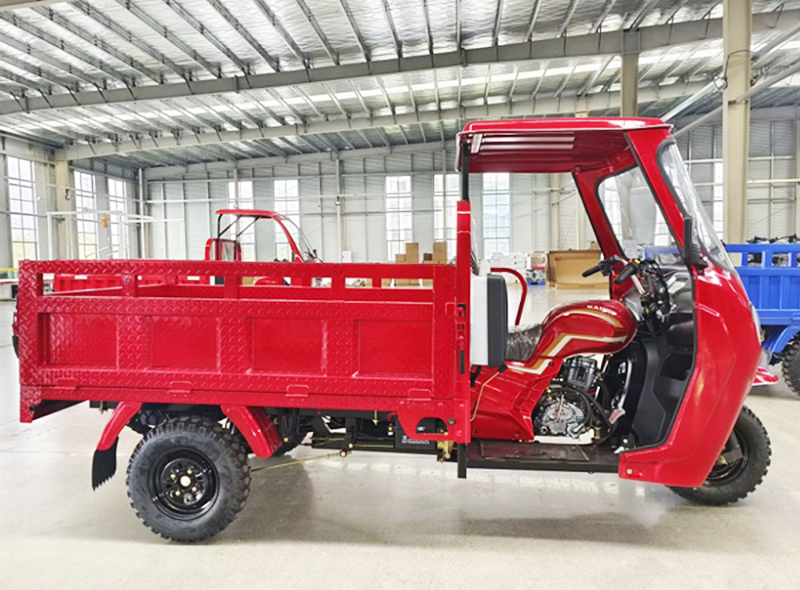
For riders of three-wheel motorcycles for cargo, understanding the vehicle's center of gravity is essential. Load distribution directly affects handling. A 200cc water cooled cargo tricycle like the L9 model requires different cornering techniques than a smaller 150cc gasoline cargo tricycle.
Key Balance Challenges by Vehicle Type:
| Vehicle Type | Balance Difficulty | Primary Challenge |
| Two-wheel motorcycle | High (low speed) | Keeping upright at stops |
| Motorized tricycle | Low (steady) | Weight transfer in turns |
| Heavy-load cargo tricycle | Medium | Load shifting during cornering |
| Passenger tricycle | Medium | Multiple passengers affect balance |
Practical Balance Tips
Practice slow-speed maneuvers in empty parking lots
Use rear brake for low-speed control (more stable than front brake)
On motor tricycles with double rear tires, maintain even tire pressure
For heavy loading capacity cargo tricycles, distribute weight evenly
2. Navigating Traffic and Road Hazards
Motorcycles and motorized tricycles are less visible to other drivers, significantly increasing accident risk. According to NHTSA data, motorcyclists are approximately 28 times more likely than passenger vehicle occupants to die in a crash.
Defensive Riding Techniques
Defensive riding is non-negotiable. Key strategies include:
Maintain safe following distance – At least 3-4 seconds behind other vehicles
Position for visibility – Ride where drivers can see you in their mirrors
Scan constantly – Look 12-15 seconds ahead for hazards
Cover brakes – Keep fingers ready over brake levers at intersections
For cargo tricycle operators, additional considerations apply:
Wider turns require more space awareness
Extended stopping distances due to heavier loads
Limited rear visibility on tricycles with big tool boxes
Weather-Related Challenges
Rain, wind, and extreme temperatures demand technique adjustments. Wet roads reduce tire traction by up to 50%. Riders of air-cooled oil tricycles should be aware that stopping distances increase significantly on wet surfaces.
Weather Riding Tips:
| Condition | Adjustment |
| Rain | Reduce speed 10-15 mph, increase following distance |
| Strong wind | Lean into wind, grip tank with knees |
| Extreme heat | Hydrate before rides, watch for tire pressure changes |
| Night riding | Use high beams appropriately, reduce speed |
3. Mastering Throttle and Clutch Control
Smooth throttle and clutch operation separates skilled riders from novices. The synchronization of these controls affects acceleration, deceleration, and overall ride comfort.
The Friction Zone
The "friction zone" is where the clutch begins to engage. Mastering this zone allows riders to:
Move from a stop smoothly
Perform slow-speed maneuvers without stalling
Control power delivery on high-power motor tricycles
For riders of 150cc gasoline cargo tricycles or 200cc water cooled models, understanding throttle response characteristics is crucial. Different engine types have different power bands.
Smooth Gear Shifting Techniques
Step-by-step smooth shifting:
Roll off throttle completely
Pull clutch lever fully
Shift firmly to next gear
Release clutch smoothly while rolling on throttle
For motorcycles with 5 gears or tricycles with reverse gear, practice finding the friction zone in each gear.
Pro Tip: On high-speed motors used for loading cargo, downshifting requires rev-matching (blipping the throttle) to prevent rear wheel lockup and maintain stability.
4. Overcoming Psychological Barriers
Fear and anxiety are among the hardest psychological barriers for new riders. The inherent risks of riding can create hesitation that directly impacts performance.
Building Confidence
Proven confidence-building methods:
Start in empty parking lots, not busy streets
Set small, achievable goals each practice session
Ride with experienced companions
Take formal training courses
For commercial cargo tricycle operators, additional stressors include delivery deadlines and heavy traffic. Structured practice and route familiarization reduce anxiety over time.
The Role of Proper Equipment
Riding confidence increases with proper gear. Essential items include:
Understanding your motorcycle body parts and how they function also reduces fear. When you know how each component works, you trust the machine more.
5. Understanding Motorcycle Mechanics
A comprehensive understanding of motorcycle mechanics enhances both safety and performance. Familiarity with key components allows riders to detect issues before they cause breakdowns.
Essential Motorcycle Body Parts to Know
| Component | Function | Maintenance Check |
| Engine | Power generation | Oil level, strange noises |
| Clutch | Power disengagement | Cable tension, slipping |
| Brakes | Stopping power | Pad thickness, fluid level |
| Suspension | Ride comfort and handling | Leaks, rebound damping |
| Tires | Traction and stability | Pressure, tread depth |
| Chain/Belt | Power transmission | Lubrication, tension |
For motorized tricycle owners, additional components to monitor include:
Differential (if equipped)
Reverse gear mechanism
Cargo box mounting points
Double rear tire alignment
Maintenance Schedules
Weekly checks:
Tire pressure (especially critical for tricycles with double rear tires)
Fluid levels (oil, coolant, brake fluid)
Lights and signals
Chain lubrication
Monthly checks:
For water cooled engines (like the L9 200cc model), coolant level checks are essential to prevent overheating, especially when carrying heavy loads.
6. Maneuvering in Tight Spaces
Navigating parking lots, congested traffic, and narrow streets challenges even experienced riders. Low-speed stability decreases significantly, making precision control essential.
Slow-Speed Maneuvering Techniques
Essential slow-speed skills:
For cargo tricycles with large cargo space, turning radius is wider. Practice in open areas before attempting tight spaces. The W1 high-power motor tricycle requires extra space awareness due to its extended cargo bed.
Common Mistakes in Tight Spaces
| Mistake | Consequence | Correction |
| Looking down | Loss of balance | Look where you want to go |
| Dragging front brake | Instability | Use rear brake for slow control |
| Stiff arms | Poor steering | Relax elbows, grip tank with knees |
| No clutch modulation | Jerky movement | Work the friction zone |
For tricycles with semi-cab designs, the enclosed cab affects sightlines. Adjust mirrors and turn your head to compensate for blind spots.
7. Developing Situational Awareness
Situational awareness—knowing what's happening around you and anticipating hazards—is a learned skill that separates safe riders from accident statistics.
The SEE Strategy
S.E.E. (Search, Evaluate, Execute):
Search – Continuously scan the environment (mirrors, ahead, sides)
Evaluate – Identify potential hazards (turning cars, debris, pedestrians)
Execute – Take appropriate action (slow, swerve, accelerate)
For motor tricycle riders in urban delivery scenarios, heightened awareness of:
Double-parked delivery vehicles
Opening car doors
Pedestrians stepping between parked cars
Potholes and uneven pavement
Hazard Perception Training
Studies show that experienced riders scan differently than novices. They:
Look farther ahead (12-15 seconds vs 3-4 seconds)
Check mirrors more frequently
Identify escape paths automatically
To improve, practice verbalizing hazards as you ride: "Car waiting at side street... pedestrian at crosswalk... gravel in right tire track."
8. Physical Demands and Endurance
Motorcycle riding is physically demanding. Long rides cause fatigue, reducing concentration and reaction times.
Physical Requirements by Ride Type
| Ride Duration | Physical Demands | Key Muscle Groups |
| Short commute (under 30 min) | Low | Hands, forearms |
| Day trip (2-4 hours) | Medium | Core, back, thighs |
| Long distance (6+ hours) | High | Full body, neck, shoulders |
| Cargo delivery (all day) | Very high | Core, legs, grip strength |
For farm use load king three-wheeled passenger vehicles, operators may spend 8+ hours riding. Proper posture and regular breaks prevent fatigue-related errors.
Fitness for Riders
Recommended exercises:
Planks and push-ups (core strength)
Squats and lunges (leg stability)
Wrist curls and grip exercises
Neck stretches (range of motion)
Stretches before riding:
Neck rotations
Shoulder rolls
Wrist flexion/extension
Lower back twists
For tricycle with roof and 5 gears models, the riding position differs from standard motorcycles. Adjust handlebar and seat position to avoid reaching or overextending.
9. Adapting to Different Vehicle Types
Different motorcycles and tricycles present unique handling characteristics.
Two-Wheel vs Three-Wheel Dynamics
| Characteristic | Two-Wheel Motorcycle | Motorized Tricycle |
| Low-speed stability | Requires active balancing | Inherently stable |
| Cornering technique | Lean into turn | Lean out or stay upright |
| Load sensitivity | Moderate | High (affects rear tracking) |
| Cargo capacity | Limited | Extensive (especially open body cargo tricycles) |
| Learning curve | Steeper | Gentler |
Popular Motorized Tricycle Models and Their Characteristics
Based on market offerings, understanding model-specific traits helps riders choose appropriately:
| Model | Key Feature | Best For |
| L9 200cc Water Cooled | Liquid cooling, open body | Heavy cargo, hot climates |
| Q3 with Radio & Roofshed | Comfort features, 200cc | Passenger transport, long rides |
| Beiyi Chopper 150cc | Styling, gasoline | Personal use, light cargo |
| Zhengcheng II 150cc | Economical, factory direct | Budget-conscious buyers |
| North Chopper High Speed | Speed-focused | Time-sensitive delivery |
| W1 High-Power Motor | Power, cargo space | Heavy-duty commercial use |
| Storm Chopper Air-Cooled | Simplicity, durability | Rural/agricultural use |
| Q1 150cc Air Cooled | Standard cargo | General cargo transport |
| C2 CCC Certified | Heavy load, certification | Commercial compliance |
| Galaxy No.2 Multi-Purpose | Farm use, passenger | Agricultural communities |
| Hanhoo AP with Roofshed | Value pricing | Wholesale/distribution |
10. Continuous Learning and Community Engagement
Motorcycle mastery is not a destination—it's a continuous journey. Even professional riders practice and learn throughout their careers.
Advanced Training Opportunities
MSF Advanced Rider Course – Refines cornering and braking
Track days – Learn limits in controlled environment
Off-road training – Improves bike control dramatically
Cargo tricycle certification – Commercial operation standards
Engaging with the Riding Community
The motorcycle community offers invaluable knowledge sharing. Benefits include:
For global distributors and commercial operators, connecting with manufacturers like Beiyi, KAINIU, Wuyang, and Hanhoo provides technical support and parts access.
Conclusion
So, what is the hardest part of riding a motorcycle? The answer is multifaceted. For beginners, balance and coordination present the steepest learning curve. For urban commuters, traffic navigation and hazard perception are paramount. For cargo tricycle operators carrying heavy loads, understanding weight distribution and vehicle dynamics is essential. For all riders, mastering throttle and clutch control, overcoming psychological barriers, and maintaining mechanical awareness are lifelong pursuits.
The journey from novice to skilled rider requires patience, practice, and continuous learning. Whether you're riding a two-wheel motorcycle, a motorized tricycle for cargo, or a passenger tricycle with roofshed, the principles remain the same: respect the machine, understand your limits, and never stop improving.
By addressing each challenge methodically—starting with balance exercises, progressing to traffic navigation, and ultimately mastering all aspects of riding—you can transform the hardest parts of motorcycling into second-nature skills. The reward is not just safety, but the profound joy of confident, capable riding.
Remember: Every expert rider was once a beginner. The key is consistent practice and a willingness to learn from each ride.
FAQ
Q: What is the hardest part of riding a motorcycle for beginners?
A: Most beginners find low-speed balance and coordinated clutch-throttle control most challenging. Starting and stopping smoothly without stalling requires significant practice.
Q: Is riding a motorized tricycle easier than a two-wheel motorcycle?
A: Yes for balance (three wheels provide stability), but cornering technique differs. Tricycles require different body positioning and have wider turning radii.
Q: How long does it take to master motorcycle riding?
A: Basic competency takes 20-30 hours of practice. Proficiency takes 6-12 months of regular riding. Mastery is a continuous process.
Q: What is the most dangerous part of riding?
A: Intersections are statistically most dangerous, accounting for approximately 40% of motorcycle accidents. Other drivers failing to see riders is the primary cause.
Q: Do cargo tricycles handle differently than passenger tricycles?
A: Yes. Cargo tricycles have higher centers of gravity when loaded and require smoother inputs. Load distribution critically affects cornering stability.
Q: What motorcycle body parts should I understand as a new rider?
A: Focus on throttle, clutch, brakes (front and rear), gear shifter, and suspension settings. Understanding these components directly affects your control and safety.


