Sanitation is a critical aspect of urban management, and the tools used for waste collection and disposal play a significant role in ensuring that cities remain clean and sustainable. Among the various vehicles designed for waste collection, the Sanitation Vehicle Tricycle stands out for its flexibility, affordability, and efficiency, especially in areas where larger vehicles cannot access. This article will delve into the design features of Sanitation Vehicle Tricycles, exploring how they are optimized for efficient waste dumping, and the role they play in waste management.
What is a Sanitation Vehicle Tricycle?
A Sanitation Vehicle Tricycle is a specialized tricycle designed for waste collection, primarily used in urban and rural areas where traditional garbage trucks might not be able to reach. These vehicles typically consist of a robust tricycle frame with a large waste collection bin or compartment attached to the back, making them ideal for maneuvering through narrow streets, alleys, and other confined spaces.
Sanitation Vehicle Tricycles are designed to be both practical and durable, offering an affordable solution for municipalities and waste management companies to keep areas clean, particularly in densely populated urban regions or areas with limited infrastructure.
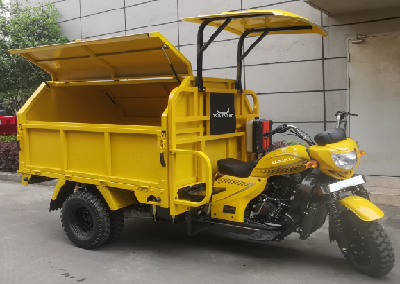
Key Features of a Sanitation Vehicle Tricycle
When it comes to Sanitation Vehicle Tricycles, several key design features ensure that they are effective for waste collection and dumping. Below are the primary aspects that contribute to the efficiency of these vehicles:
1. Compact and Maneuverable Design
The main advantage of a Sanitation Vehicle Tricycle is its compact size, which allows it to maneuver easily in tight spaces. With narrow roads and alleys being common in many older urban areas, these tricycles can access places that would otherwise be unreachable by larger waste collection vehicles. Their three-wheeled design offers enhanced stability while navigating these areas.
Wheel Configuration: A standard Sanitation Vehicle Tricycle typically features three wheels for better stability, even when the vehicle is carrying a heavy load.
Size and Dimensions: These tricycles are designed to fit into areas with limited space, which is essential in urban centers with congested streets.
2. Heavy-Duty Waste Collection Bin
At the core of the Sanitation Vehicle Tricycle is its waste collection system, typically a large bin or container mounted at the back. These bins are designed to hold large volumes of waste while being durable enough to withstand the demands of daily waste collection.
Capacity: The size of the waste collection bin varies depending on the model, but most Sanitation Vehicle Tricycles are designed to carry anywhere from 500 to 1,000 liters of waste.
Material: The bins are made from corrosion-resistant materials, such as high-quality steel or reinforced plastic, to ensure that they last longer and resist wear from frequent use.
3. Efficient Dumping Mechanism
One of the critical aspects of a Sanitation Vehicle Tricycle is its ability to dump waste efficiently. Depending on the model, these vehicles can come with a variety of mechanisms for dumping the waste collected:
Manual Dumping: In some models, the waste is manually unloaded by lifting the container and tilting it to the side or back. This method is simple but effective for small-scale waste collection.
Hydraulic Dumping Systems: More advanced Sanitation Vehicle Tricycles feature hydraulic systems that allow the bin to be lifted and dumped automatically. This system reduces manual labor and improves efficiency, especially when handling large amounts of waste.
4. Durable Engine and Power System
A Sanitation Vehicle Tricycle is only as good as its engine and power system. These vehicles are typically powered by either gasoline or electric motors, depending on the model and customer preference.
Gasoline Engines: Gas-powered Sanitation Vehicle Tricycles are commonly used for waste collection in areas where long operating hours and high power demands are required. These engines are typically 150cc to 300cc, providing a balance between power and fuel efficiency.
Electric Engines: Increasingly, electric Sanitation Vehicle Tricycles are being adopted due to their eco-friendliness. These vehicles use rechargeable batteries and are ideal for short-distance travel, reducing air pollution and carbon footprints.
5. Safety Features
Given the nature of waste collection, safety is a critical consideration in the design of Sanitation Vehicle Tricycles. These vehicles are equipped with several safety features to protect both the operators and pedestrians:
Reflective Strips: To ensure visibility, especially during night-time operations, these tricycles are fitted with reflective tape or strips, improving their safety.
Sturdy Frame: The frame of the tricycle is made from heavy-duty materials to ensure it can carry the weight of both the driver and the waste while providing adequate stability.
Braking System: Most Sanitation Vehicle Tricycles come with enhanced braking systems, such as hydraulic disc brakes, to ensure that the vehicle can stop quickly and safely, even when fully loaded.
Types of Sanitation Vehicle Tricycles
While all Sanitation Vehicle Tricycles are designed to perform waste collection efficiently, there are several types that cater to different needs:
1. Passenger and Cargo Tricycles
For waste collection in areas with mixed-use roads, Passenger Tricycles with Waste Collection Compartments are ideal. These models allow for both transporting waste and passengers, which is useful in urban areas with high population density.
2. Special-Purpose Sanitation Vehicles
Some Sanitation Vehicle Tricycles are built specifically for specialized tasks, such as Fire-fighting Tricycles or Sanitation Vehicles with Refrigerated Cargo. These models are designed to cater to specific sanitation needs, providing both versatility and functionality for urban services.
3. Electric Sanitation Tricycles
As cities become more eco-conscious, the demand for electric waste collection vehicles has grown. Electric Sanitation Vehicle Tricycles are increasingly popular in urban areas, particularly for those focusing on sustainability and reducing their carbon footprint.
Advantages of Sanitation Vehicle Tricycles
The design of Sanitation Vehicle Tricycles offers several advantages over traditional waste collection methods, especially in urban areas with congested streets or narrow alleyways.
1. Cost-Effective
Sanitation Vehicle Tricycles are significantly more affordable than larger waste trucks, both in terms of upfront cost and maintenance. This makes them an attractive option for smaller municipalities or businesses that need a cost-effective waste management solution.
2. Efficiency in Urban Areas
These tricycles excel in urban environments, where space is limited, and large trucks cannot easily navigate. Their ability to move through tight streets and access hard-to-reach areas makes them indispensable for maintaining cleanliness in dense neighborhoods.
3. Environmentally Friendly
With the rise of electric Sanitation Vehicle Tricycles, waste management can become more eco-friendly. These vehicles are quieter and produce fewer emissions compared to gasoline-powered waste collection vehicles, contributing to reduced air pollution in urban centers.
4. Low Operational Costs
Operating a Sanitation Vehicle Tricycle involves lower fuel and maintenance costs compared to larger trucks. Additionally, their compact size allows for easier parking and storage, reducing the logistical challenges associated with managing large fleets of waste collection vehicles.
FAQs
1. How does the hydraulic dumping system work on a sanitation vehicle tricycle?
The hydraulic dumping system uses pressurized fluid to lift the waste collection bin automatically, allowing it to be tilted and emptied into a larger waste disposal container. This system reduces manual labor and increases efficiency.
2. What types of engines are used in sanitation vehicle tricycles?
Sanitation vehicle tricycles typically use gasoline engines ranging from 150cc to 300cc or electric motors, depending on the model. Gasoline engines are more powerful and suited for longer distances, while electric models are ideal for eco-conscious waste collection in smaller areas.
3. Can sanitation vehicle tricycles be customized for specific needs?
Yes, Sanitation Vehicle Tricycles can be customized to meet specific needs, such as the addition of refrigeration units for waste disposal or specialized bins for hazardous materials. Custom features can be tailored based on the operational requirements of the municipality or business.
Conclusion
The Sanitation Vehicle Tricycle is a vital tool for efficient waste management, offering a compact, cost-effective, and eco-friendly solution for urban sanitation. Its design allows it to navigate narrow streets, carry significant loads, and dump waste efficiently, making it indispensable for municipal waste collection. Whether it’s a passenger tricycle, electric model, or special-purpose vehicle, these tricycles are becoming an essential part of modern waste management strategies.
At Chongqing Jinboss Import & Export Co., Ltd., we offer a range of Sanitation Vehicle Tricycles designed to meet the diverse needs of our customers. Whether you're looking for a basic waste collection vehicle or a specialized model for specific tasks, our high-quality tricycles provide the durability, efficiency, and performance that waste management companies need to maintain cleaner, greener cities.


